Practice Before Assessment
Learners first explore a realistic decision and receive coaching before completing the formal knowledge check.
Workplace Learning System | Scenario-Based Learning
An integrated quarterly competency workflow designed to strengthen emergency-response readiness during pediatric home visits.
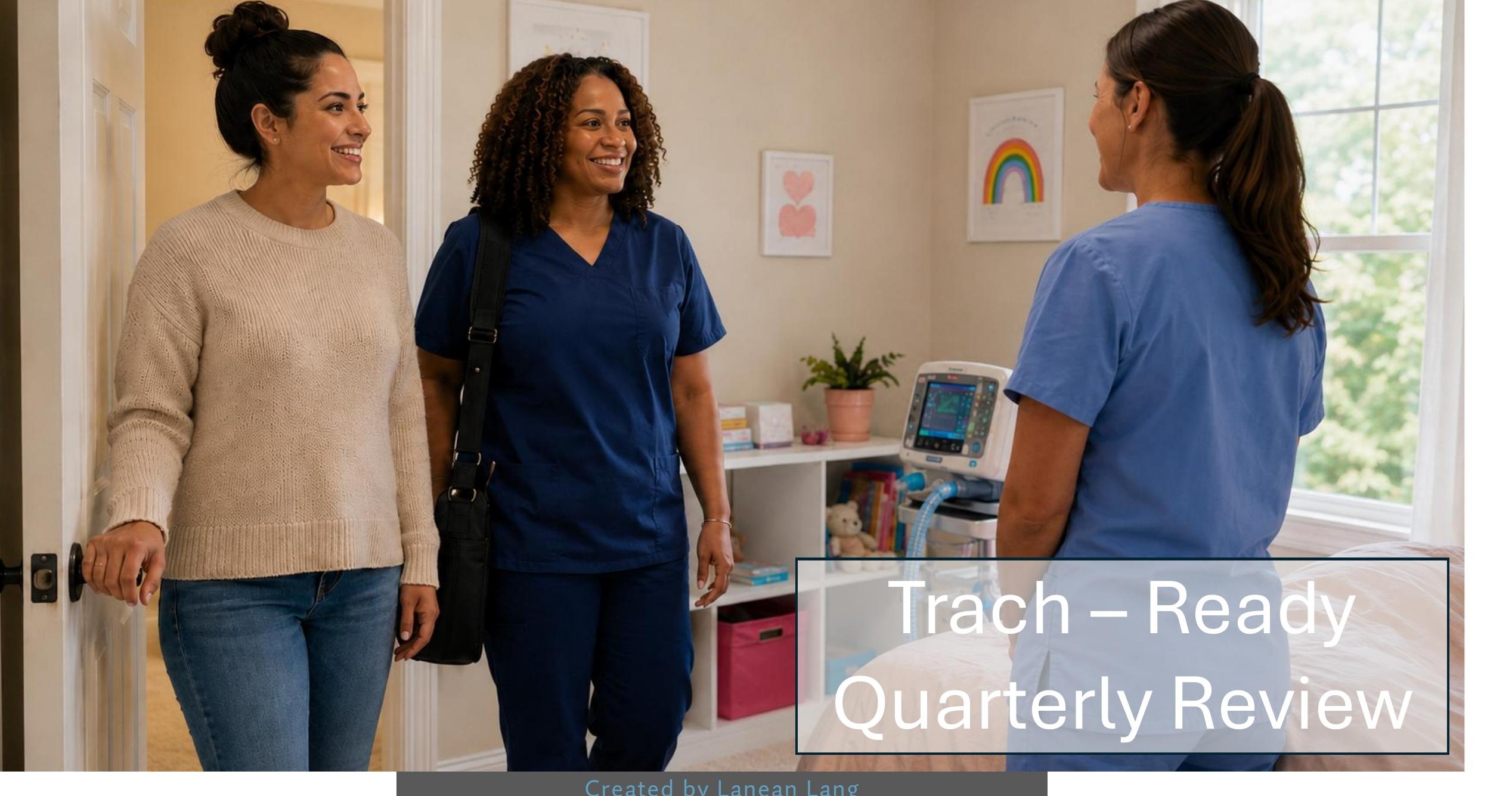
Trach Ready is a workplace learning prototype that connects interactive decision-making practice, knowledge assessment, automated notification and hands-on competency validation.
Rather than treating quarterly education as a single presentation or quiz, the experience guides learners through a complete process—from reviewing expectations and responding to a realistic scenario to completing an assessment and scheduling skills validation with a respiratory therapist.
A pediatric home-visit event identified an opportunity to strengthen emergency-response readiness and clarify the case manager’s role when an unexpected tracheostomy or ventilator event occurs.
The learning solution needed to reinforce rapid recognition, communication and use of the patient-specific emergency plan while acknowledging that online instruction alone cannot validate hands-on competency.
Scenario-based quarterly introduction
Lumi interactive emergency scenario
Microsoft Forms knowledge assessment
Automated notification based on branch
Hands-on competency checkoff with an RT
Completion recorded in the designated company system
The process combines decision-making practice, knowledge assessment and demonstrated hands-on competency.
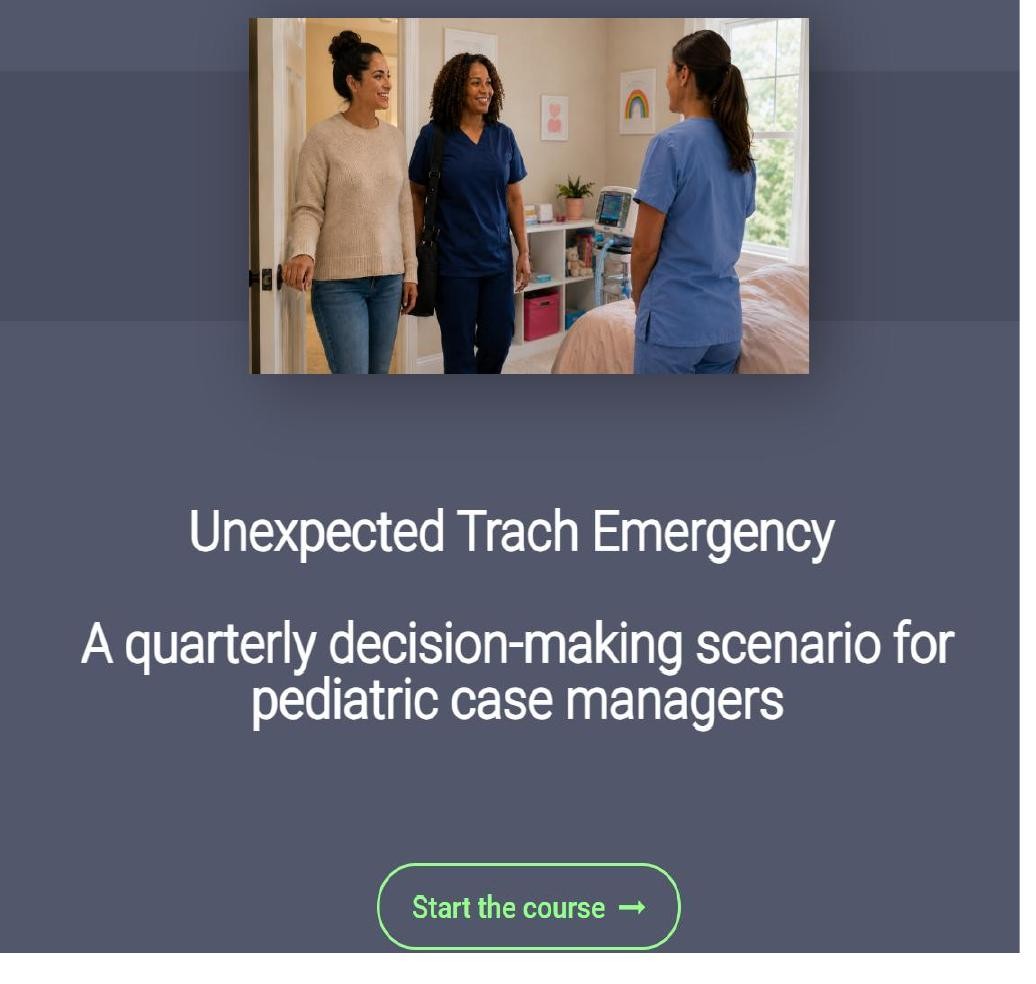
The Lumi H5P experience places the case manager in a realistic pediatric home-care situation and requires an immediate response when a tracheostomy becomes dislodged.
Choice-specific feedback reinforces attention to the child, rapid communication and initiation of the patient-specific emergency plan. The activity provides a safe opportunity to practice judgment before hands-on validation.
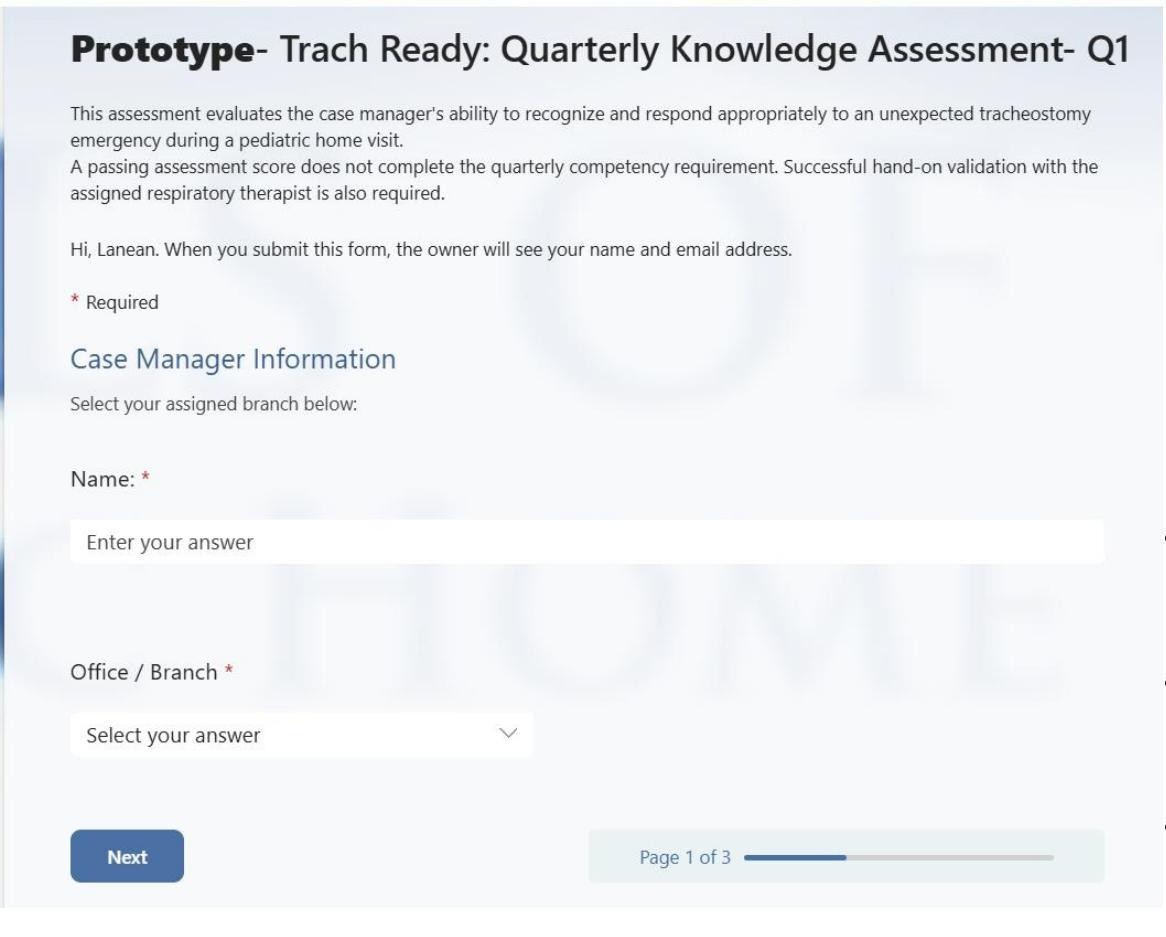
A Microsoft Forms quiz evaluates knowledge through related scenario-based questions without simply repeating the interactive activity. The form records the employee’s selected branch and includes acknowledgment of the required hands-on checkoff.
A Power Automate workflow routes the completion notification according to branch so the appropriate respiratory therapist can review the submission and coordinate skills validation. For the prototype, notifications were routed to the project creator during testing.
Routing Workflow
Learners first explore a realistic decision and receive coaching before completing the formal knowledge check.
Online learning is paired with hands-on validation because emergency-response competency cannot be established through a quiz alone.
Rotating scenarios reinforce core skills while exposing learners to a broader range of realistic home-care situations.
Instructional Designer, Healthcare Subject-Matter Expert, Scenario Writer, Assessment Designer and Workflow Developer
I translated a workplace safety need into an integrated learning process, developed the scenario and assessment content, created the visual prototype and configured the automated branch-routing workflow.
The prototype was positively received by respiratory management and advanced to state nursing and operations leadership for further discussion. Leadership identified the concept as a possible foundation for a broader scenario-based learning experience serving case managers and field staff.
The project remains a prototype. Clinical content, policy alignment, workflow ownership and implementation details are subject to organizational review and approval.
This project demonstrated how learning design can extend beyond content delivery. By connecting scenario practice, assessment, automated follow-up and hands-on validation, the prototype supports both learner development and operational completion.
View the concise presentation outlining the learning need, learner experience, assessment workflow and competency-validation process.